
Optimised Wireless Solutions for Modern Networks
Discover how our tailored wireless network designs enhance connectivity, security, and performance for homes and offices.
Designed, segmented, and integrated wireless networks that scale with your environment.
Reliable Connectivity for Every Environment
Comprehensive Wireless Network Design and Deployment
At Evening Computing, we specialise in crafting wireless networks that prioritise reliability, security, and long-term functionality. Our team ensures that your network is robust and adaptable, meeting the unique demands of both residential and commercial settings.
A properly designed wireless network is not just about coverage. It is about security, segmentation, performance, and long term reliability.
Integrating Wireless with Broader Network Infrastructure
The Critical Role of Wireless in Network Architecture
Wireless networks are a crucial component of the overall network architecture, requiring seamless integration with existing cabling and security measures.
Well planned design ensures that wireless solutions not only provide strong connectivity but also enhance the security and efficiency of the entire network.
By segmenting networks using VLANs and aligning wireless access points with specific network segments, we mitigate risks and optimise performance, ensuring that your network is both resilient and efficient.
Understanding Segmented Networks
Wireless works best when it is designed as part of the wider network, not added as an afterthought.
A well designed wireless network is not just about coverage. It is about security, segmentation, performance, and long term reliability.
Segmented networks are designed to enhance security and performance by dividing a network into multiple smaller, isolated segments.
Wireless access points play a crucial role in this setup by connecting devices to specific network segments, such as guest Wi-Fi, business systems, payment networks, or IoT devices.
This approach allows for better control over network resources and minimises the risk of unauthorised access or data breaches.
Access Point Isolation and why it matters for business networks
Access Point Isolation, sometimes called Client Isolation or Wireless Isolation, prevents devices connected to the same wireless network from communicating directly with each other.
Each device can reach the internet gateway, but it cannot see or access other wireless devices on that network.
This is particularly important on guest wireless networks in business environments. If customers, visitors, or unmanaged devices connect to your WiFi, you do not want them discovering printers, file shares, or internal systems.
Isolation reduces lateral movement between devices and lowers the risk of malware spreading across the network.
In many cases, isolation can also be used on dedicated IoT networks, where devices such as cameras, smart screens, or door controllers do not need to communicate with each other directly. This adds another layer of containment should one device become compromised.
Are there downsides?
Some technologies rely on devices being able to discover each other across the local network. For example, screen casting and certain printing features use broadcast or multicast discovery protocols.
If isolation is enabled in the wrong place, some of these features may not work as expected.
This is why wireless design should not be based on a single setting. It should be part of a wider plan that considers:
Security
Segmentation
Performance
Device roles
Long term maintainability
Isolation is not a substitute for proper VLAN segmentation, but it adds another practical layer of containment where appropriate.
What goes wrong when wireless is not designed properly?
Poorly designed wireless networks often place all devices on the same network segment. This means guest devices, business computers, payment systems, printers, and IoT equipment can all see each other.
This increases security risk, reduces performance during busy periods, and makes troubleshooting more complex.
Wireless should not be a flat network. It should be structured.
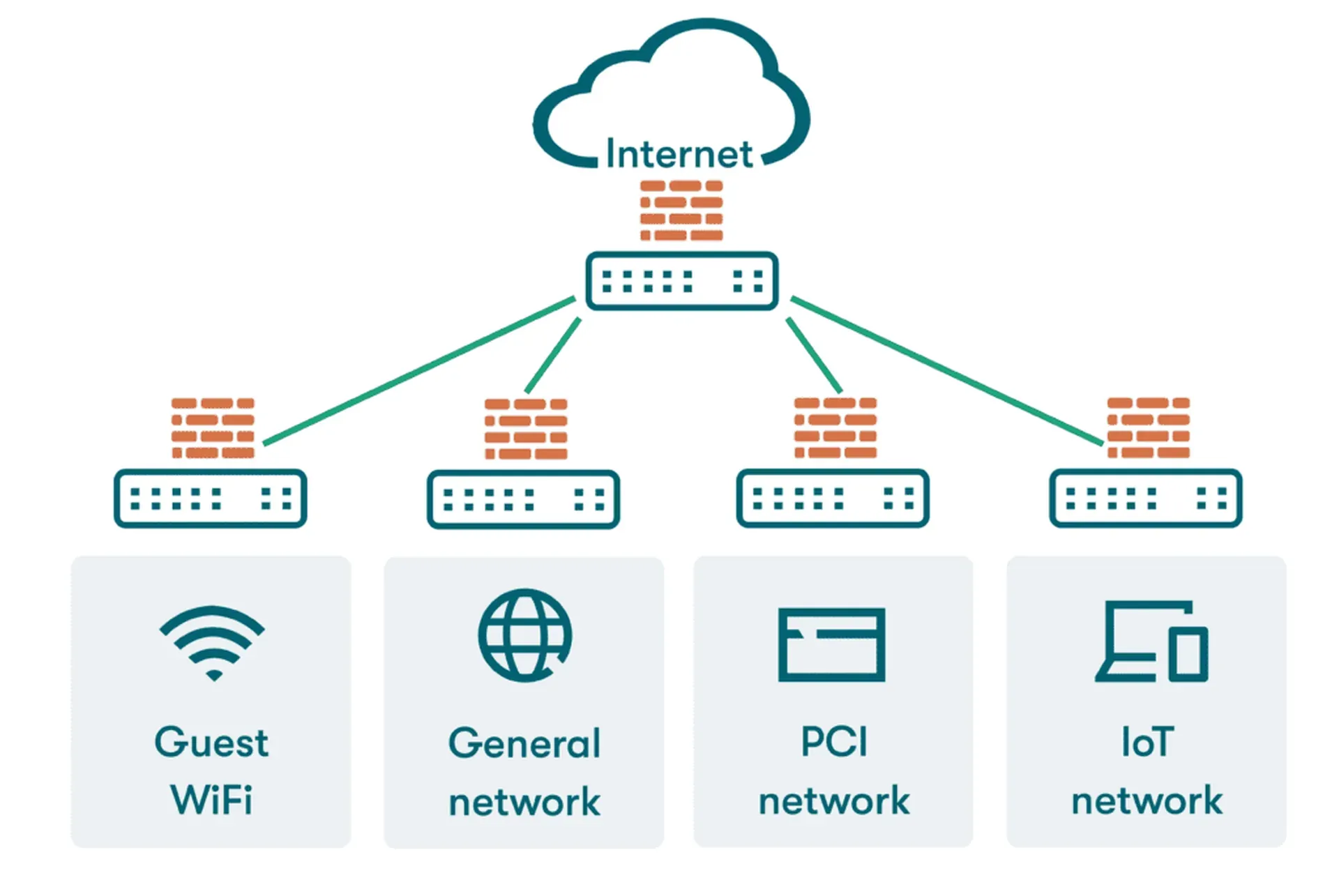
PCI stands for Payment Card Industry.
A PCI network is a secure, segmented wired or wireless network used only for card payment systems, keeping payment traffic separate from office systems and guest Wi-Fi. A PCI network should only allow the minimum required connectivity to payment processors, with strict firewall controls separating it from office systems.
IoT stands for Internet of Things.
IoT devices such as cameras, smart TVs, printers, door controls, or sensors should be placed on their own VLAN to keep them isolated from business or personal systems, reducing security risk and limiting the impact of a compromised device. Many IoT devices are rarely updated and can become weak points in a network if not isolated correctly.
Key Components of Wireless Network Design
Comprehensive Wireless Network Planning
Effective wireless network design involves several critical components that ensure robust performance and security. Key considerations include the layout of the building and the materials used in its construction, which can impact signal strength and coverage. Additionally, understanding device density and usage patterns helps in planning for adequate capacity and avoiding congestion. Integration with existing wired infrastructure, such as cabling and switches, is essential for seamless operation.
Network segmentation using VLANs, along with firewall rules and traffic isolation, further enhances security and performance. Lastly, ongoing management and monitoring are vital to maintain optimal network health and quickly address any issues.
By addressing these factors, we create a wireless network that not only meets current demands but is also scalable for future needs. This comprehensive approach ensures that the network supports real-world applications and provides a reliable foundation for business operations.
Tailored Wireless Solutions for Diverse Environments
Adapting Wireless Networks to Specific Needs
Wireless network requirements can vary significantly between homes and office environments, necessitating tailored solutions to meet distinct needs. In residential settings, the focus is often on providing reliable coverage throughout living spaces, with considerations for separating personal, work, and guest devices to ensure privacy and security. Additionally, support for smart home devices and IoT equipment is increasingly important as homes become more connected.
In contrast, office environments demand higher device density support, robust guest access controls, and effective segmentation between different users, services, and systems. Integration with security protocols and compliance requirements is also critical in these settings. Our approach is to customize wireless networks based on the specific requirements of each environment, ensuring optimal performance and security. By doing so, we provide solutions that are not only efficient but also adaptable to future technological advancements and business growth.
Integrating Wireless Networks
Seamless Network Cohesion
For a truly cohesive network environment, wireless networks must be seamlessly integrated with structured cabling, robust security measures, and ongoing support. This ensures not only optimal performance but also long-term reliability and security.
At Evening Computing, we prioritize a holistic approach that aligns wireless solutions with existing network infrastructure, enhancing overall efficiency and reducing potential vulnerabilities.
Comprehensive Network Assessment
Thorough Evaluation Process
Before designing or deploying any wireless network, we conduct a detailed assessment of the physical environment and existing infrastructure. This involves evaluating current cabling, analyzing usage patterns, and understanding security needs. Our goal is to provide tailored solutions that address specific challenges and optimize network performance. By thoroughly reviewing these elements, we ensure that the proposed wireless network design is both practical and effective for your unique setting.
Wireless performance issues are rarely solved by replacing a router. They are solved by reviewing the structure of the network.
Request Your Network Assessment
Request a network assessment from Evening Computing to understand how your wireless network can be improved, secured, and scaled for your environment.
Our team will review your requirements and provide recommendations to ensure a seamless integration with your existing infrastructure.
Visit our contact page to schedule your assessment and take the first step towards a more efficient and secure network environment.